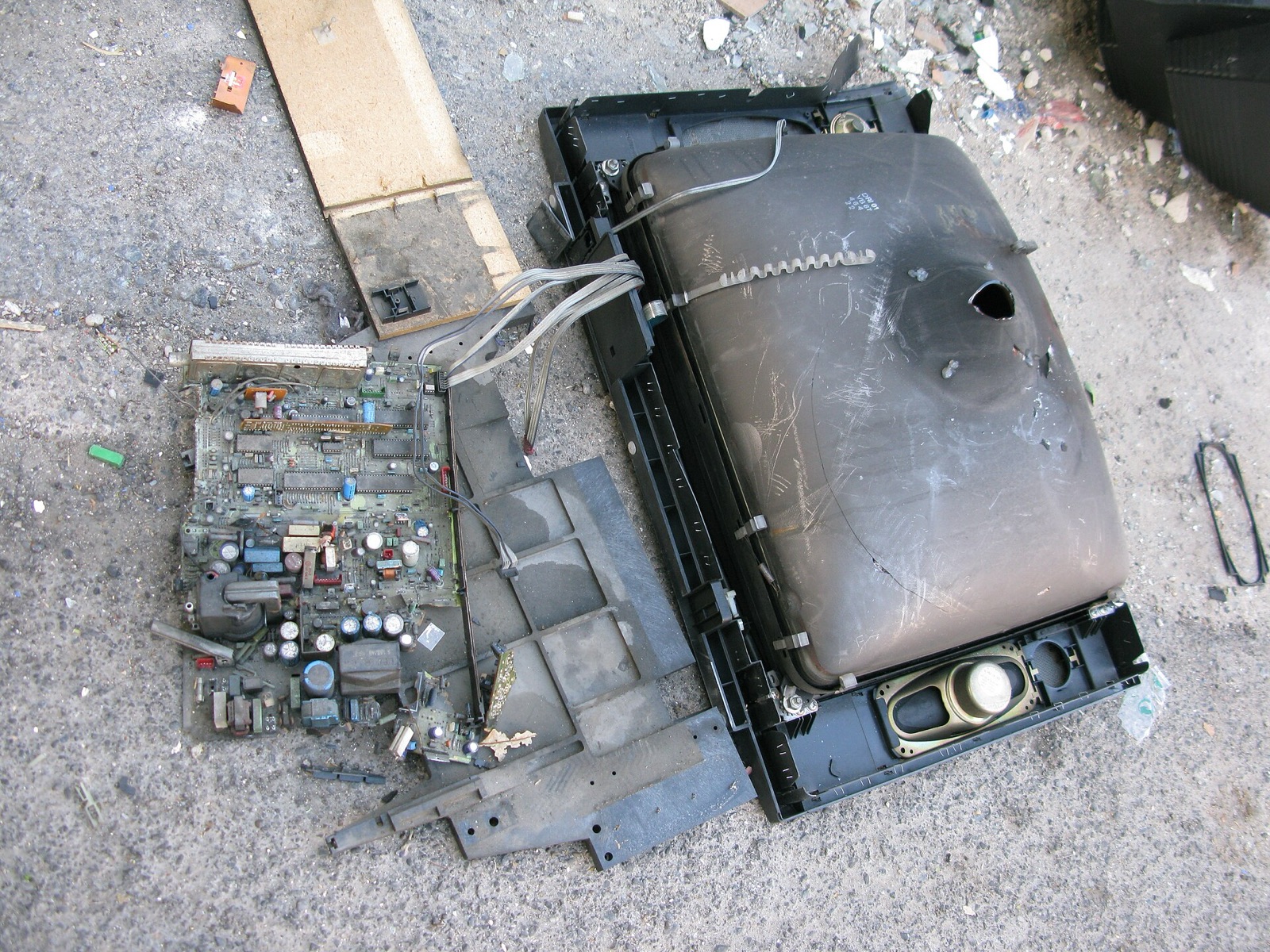

After you drop off a TV, it goes to a processor. Workers remove the hazardous parts first, mostly by hand: tube glass, circuit boards, batteries and mercury lamps. The rest is taken apart or shredded and sorted into metals and plastics for recycling. A certified recycler lowers the risk that your TV is shipped off and handled unsafely.
The short version
The details below come mostly from Washington State's 2024 E-Cycle Washington annual report. It is one of the few public reports that shows, pound by pound, where recycled TVs go. Processes vary between recyclers and states.
- Collection: you drop the TV at a store, transfer station, event or program site, or it's picked up.
- Transport: the collector ships TVs in bulk to a processor (a company that takes electronics apart).
- Removing hazardous parts: workers take out the parts that need special handling, mostly by hand.
- Shredding and sorting: machines and workers break the rest down and separate metals and plastics.
- Recovery: each material goes to a smelter, glass plant or plastics recycler.
- Residue: the small share that can't be recycled goes to a landfill. In Washington in 2024, that was 6% by weight.
Step 1: Collection
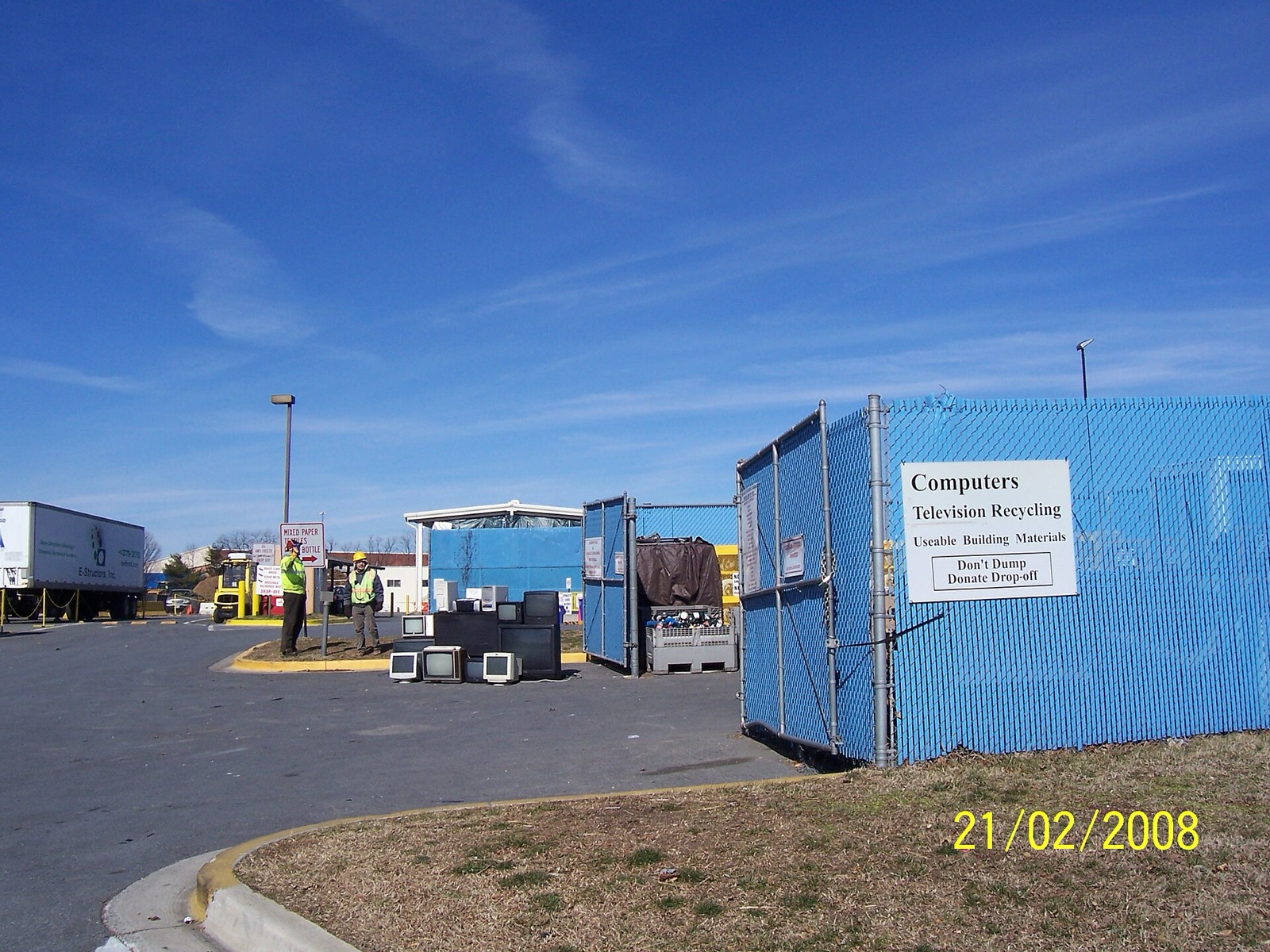
TVs reach recyclers through drop-off sites, retailers, local government sites, collection events and pickups. In Washington, you can drop off electronics for free at over 200 collection sites. Stores, nonprofits, local governments and others run them.
TVs made up most of what Washington's program handled. E-Cycle Washington collected over 12.8 million pounds of electronics in 2024. About 9.9 million pounds of that were TVs. Most of the rest were computers, laptops and monitors.
In Washington's program, none were reused. Its processors reported 0 pounds of collected TVs, computers, laptops or monitors sent to reuse in 2024.

Step 2: Removing the hazardous parts
Washington's Department of Ecology defines a processor as a business that disassembles, dismantles or shreds electronics to recover materials.
Washington's report lists how each processor handles 4 "materials of concern": tube (CRT) glass, circuit boards, batteries and mercury devices. Most processors remove them by hand.
- Tube glass: one processor hand-dismantles each set, separates the front panel glass from the funnel glass and removes all metal. Another removes the whole tube intact and packages it to prevent release.
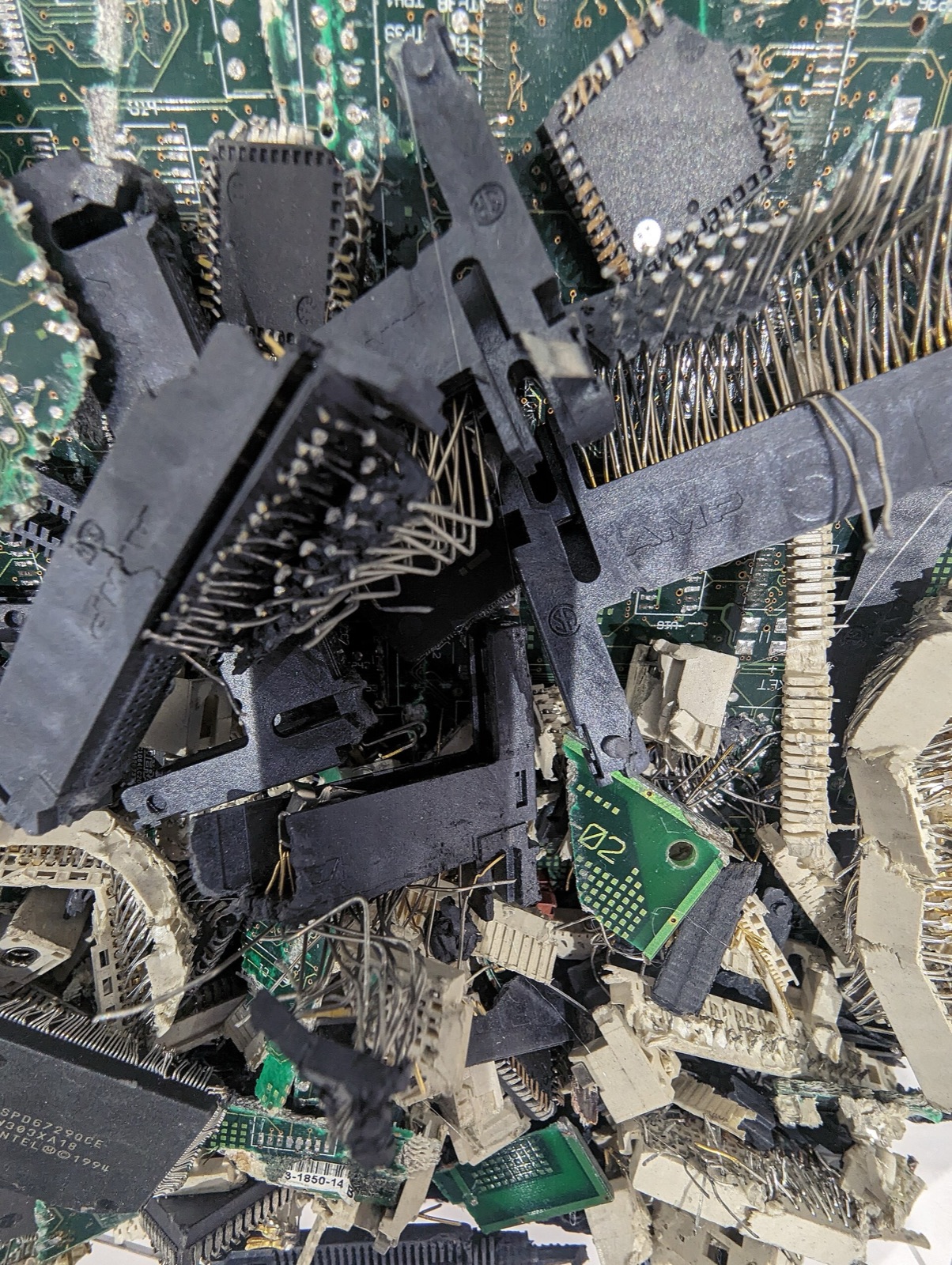
- Circuit boards: removed by hand, or by automated separation and shredding.
- Batteries: removed by hand and sorted by type.
- Mercury lamps: removed by hand and packaged so mercury isn't released. Some LCD TVs use small cold-cathode fluorescent lamps for backlighting. These lamps contain mercury, according to a 2015 fact sheet from the Interstate Mercury Education and Reduction Clearinghouse. The fact sheet says many makers are switching to LEDs, which contain no mercury.
Step 3: Shredding and sorting
Once the hazardous parts are out, the rest of the TV is broken down. Some processors do most of this by hand. Others use shredders and automated separation lines.
One processor in Washington's report separates steel and other metals with an automated system. It sorts plastics by hand, then washes, dries, shreds and grinds them into granules. Then it blends them into new plastic material. Another processor shreds plastics and sends them with circuit boards to a smelter.

Where the materials go
This table shows what Washington's processors did with the 12.8 million pounds of electronics they took in during 2024. TVs were most of that weight.
| Material | Pounds | Where it went (per processors' reports) |
|---|---|---|
| Metals (steel, aluminum, insulated wire and others) | 5,739,247 | Metal recovery in the U.S., Japan and Belgium |
| Plastic | 1,753,326 | Plastics recovery in the U.S., Canada, Malaysia and China, or a smelter along with circuit boards |
| CRT (tube) glass | 1,703,272 | Glass-to-glass recycling, tile making, glass frit, or a smelter, all in the U.S. |
| Circuit boards | 1,199,453 | Smelters for precious metal recovery in the U.S., Japan, Belgium, France and Korea |
| Batteries | 14,918 | Metal recovery or new batteries in the U.S. and Canada |
| Mercury lamps | 3,742 | Mercury recovery (retort) in the U.S. |
| Wood (recycled) | 6,998 | Wood recovery in the U.S. |
| Stored or in transit, not yet processed | 1,649,788 | Waiting for processing at year end |
| Not recyclable (mostly wood, plus some plastic and trash) | 768,683 | Landfill |
How old tube TV glass is handled
The EPA says the funnel glass in a tube (CRT) TV contains lead. So CRTs sent for disposal are hazardous waste under federal law.
The EPA says demand for new CRTs has collapsed as buyers moved to flat panels. Some processors are storing CRT glass indefinitely. The EPA says this raises the risk that the glass is mismanaged or abandoned.
In Washington's 2024 report, CRT glass went to U.S. plants that make new glass, tile or glass frit. Some went to a smelter that recovers the lead. Federal rules also cover exports. Anyone exporting CRTs for recycling must notify the EPA and get written consent from the receiving country first.
Why certified recyclers matter
The EPA recognizes 2 certification standards for U.S. electronics recyclers: R2 and e-Stewards. A certified recycler has been audited by an accredited, independent third party and stays under that body's oversight. The EPA says both standards require destruction of all data on used electronics. They also aim for safe handling by the companies that receive the materials, and less risk to health and the environment.
R2 (Responsible Recycling) is run by SERI (Sustainable Electronics Recycling International). The current version, R2v3, was adopted in June 2020. It is approved as an American National Standard. SERI says R2 certification covers the facility and all of its downstream vendors (the companies it sends materials to).
e-Stewards is run by the Basel Action Network. The group was founded to protect the planet against unsustainable and unjust trade in waste. e-Stewards says its standard follows the international waste trade rules of 190 countries. It requires its processors to destroy all data left on equipment.
| Detail | R2 | e-Stewards |
|---|---|---|
| Run by | SERI | Basel Action Network |
| Audits | Independent certification bodies; R2v3 adopted June 2020 | Third-party audits plus year-round checks |
| Data | Standards for protecting data left on devices | Processors must destroy all residual data |
| Find one | sustainableelectronics.org (Find an R2 certified facility) | e-stewards.org (Find a processor) |
The export problem
Not every "recycler" recycles. The EPA says an unknown amount of used electronics is shipped from the U.S. to developing countries that may not be able to handle it. The EPA points to open burning and acid baths used there to pull out valuable metals. It says this can expose workers to lead, mercury, cadmium and arsenic. Effects include cancers, miscarriages and nerve damage.
In 2016 the Basel Action Network hid GPS trackers in 205 old printers and monitors. It gave them to U.S. recyclers and charities. It reported that 40% of the 152 deliveries to U.S. recyclers went overseas. It also found that 93% of the exports went to developing countries. Recyclers certified to e-Stewards had the lowest export rate. Keep in mind that the Basel Action Network runs e-Stewards. The study tracked monitors and printers, not TVs.
State programs can add their own checks. Washington's program sets a rule for hazardous parts sent to a country outside the OECD (Organization for Economic Co-operation and Development). The processor needs approval from the receiving country and confirmation from the EPA. For 2024, its processors reported exporting 0 pounds of these materials to countries outside the OECD and the EU.
How much of the country's old electronics gets recycled
The EPA doesn't publish a figure for TVs alone. It does track "selected consumer electronics," a group that includes TVs, VCRs, DVD players, video cameras, stereos, phones and computer equipment.
In 2018, Americans generated 2.7 million tons of these electronics and recycled about 1.04 million tons. The EPA puts the recycling rate at 38.5%. For 2009, the EPA estimated that about 25% of discarded TVs, computers, phones and printers were collected for recycling. Most of the rest went to landfills.
| Year | Generated | Recycled |
|---|---|---|
| 2010 | 3.12 million tons | 650,000 tons |
| 2015 | 3.10 million tons | 1.23 million tons |
| 2018 | 2.70 million tons | 1.04 million tons (38.5%) |
How to make sure your TV is really recycled
- Use your state's TV recycling program if it has one. Washington's, for example, sets performance standards and annual audits for its processors.
- Ask the drop-off site or hauler which recycler gets the TVs and whether it is R2 or e-Stewards certified.
- Look the recycler up on the R2 or e-Stewards directory yourself.
- Keep tube TVs whole and flat screens uncracked, so the hazardous parts can come out safely.
- Wipe a smart TV before it leaves your home. Certified recyclers must destroy data, but a reset protects you sooner.
Checklist
- Find a drop-off site or state program near you
- Ask whether the recycler is R2 or e-Stewards certified
- Check the recycler on the R2 or e-Stewards directory
- Reset a smart TV and sign it out of your accounts
- Keep the TV whole, especially a tube TV
- Get a receipt if the site gives one
Common questions
What happens to TVs when they are recycled?
A processor takes them apart. Workers remove tube glass, circuit boards, batteries and mercury lamps first, mostly by hand. The rest is taken apart or shredded and sorted. Metals, glass, plastics and circuit boards go to smelters and recyclers. Wood cabinets, some plastic and trash go to a landfill.
What parts of a TV can be recycled?
Metals, plastic, tube glass and circuit boards are the main ones. In Washington's 2024 program, metals were the largest share by weight. Plastic, tube glass and circuit boards came next. Those figures cover all collected electronics, but most of the weight was TVs.
Are old TVs refurbished and resold?
Not in Washington's program. Its processors reported 0 pounds of collected TVs, computers or monitors sent for reuse in 2024. If your TV works, donating or selling it first gives it a longer life.
What happens to the lead in old tube TVs?
In Washington, the leaded glass went to plants that make new glass or tile. Some went to a smelter that recovers the lead. The EPA treats CRTs sent for disposal as hazardous waste because of the lead in the funnel glass.
What is the difference between R2 and e-Stewards?
Both are independent certifications for electronics recyclers, and both require data destruction. R2 is run by SERI and covers a facility and its downstream vendors. e-Stewards is run by the Basel Action Network, a group that works against unjust trade in waste.
Do recycled TVs get shipped overseas?
Some electronics do. The EPA says an unknown amount is shipped to developing countries, where unsafe methods can expose workers to lead and mercury. A certified recycler, or a state program that tracks exports, lowers that risk.
What percent of electronics are recycled in the U.S.?
The EPA put the recycling rate for selected consumer electronics, including TVs, at 38.5% in 2018. It doesn't publish a rate for TVs alone.
Sources
Checked November 24, 2026. Your local drop-off site’s rules come first.
Washington Materials Management and Financing Authority: E-Cycle Washington 2024 annual report ↗Washington Department of Ecology: E-Cycle information for processors ↗EPA: Cathode ray tubes (CRTs) ↗EPA: Certified electronics recyclers ↗EPA: Cleaning up electronic waste (e-waste) ↗EPA: Durable goods, product-specific data ↗SERI: R2 standard ↗e-Stewards ↗Basel Action Network: Secret tracking project finds that your old electronic waste gets exported to developing countries (2016) ↗IMERC fact sheet: Mercury use in lighting (2015, hosted by EPA) ↗How we research →